

About the CRJC The Canadian Restorative Justice Consortium (CRJC)
We are a national non-profit dedicated to advancing restorative justice practices across Canada. We provide a collective voice for the RJ movement, working to ensure that restorative options are available to every person impacted by harm.
Our Strategic Goals:
Advocacy: Raising awareness of RJ as a viable, effective alternative to traditional punitive measures.
Collaboration: Strengthening relationships between local, provincial, and national RJ stakeholders.
Education: Providing the tools and research necessary to support high-quality restorative practice.
Join Us Whether you are a practitioner, a student, or an advocate, the CRJC is your connection to the national restorative justice community. Together, we are building a more compassionate Canada.

Meet the Team
-

Gillian Sayer (she/her)
CHAIR
Gillian is a forensic scientist and expert witness with over 15 years of experience in the field. Gillian developed an interest in restorative justice while obtaining a certificate in Indigenous Knowledges and Experiences from Toronto Metropolitan University in 2022 and is enthusiastic about spreading awareness of restorative practices within Canada. She brings with her a knowledge of the Canadian criminal justice system and a keen understanding of the seriousness of criminal matters for all parties involved. In her spare time, Gillian enjoys volunteering at a local drop-in centre for people experiencing homelessness and sewing one-of-a-kind garments for friends and family.
-

Sheri Halladay (she/her)
VICE CHAIR
Sheri began as a volunteer with Community Justice in 2000. In 2001, she was honored to become a staff member. Sheri has witnessed restorative practices broaden to include communities of care with victims’ and offenders’ families and friends participating in collaborative processes called forums, conferences, or circles. Sheri holds restorative practices in very high regard as you can tell by the passionate was she speaks about the process. She is amazed at the authentic and genuine emotions that are shared, the body language that is translated, and the positive energy that steps out. Sher has endorsed and supported the relationships that are mended and strengthened in out community. Sheri is the mother of two adult daughters whom she adores…because they make her so proud.
-

Jenna Smith (she/her)
TREASURER
A dedicated advocate for community-led justice, Jenna lives and works in Treaty 4 territory. She holds a Bachelor of Arts in Human Justice with Great Distinction from the University of Regina, is a certified heritage carpentry tradesperson, and is currently completing her Master of Business Administration.
With a diverse professional background spanning policy research, trade work, court operations, and frontline community safety, Jenna brings a holistic perspective to her work with the CRJC.
Beyond her board duties, Jenna is a published author in the field of restorative justice and frequently engages with her local community through school presentations. By blending her unique perspective as a skilled tradesperson with her deep roots in human justice and financial oversight, she brings a well-rounded, practical approach to advancing meaningful restorative practices nationwide.
-
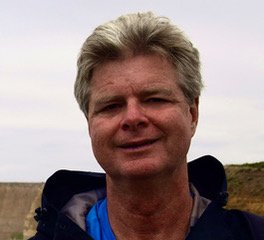
Chuck Daly (he/him)
Chuck’s restorative journey began in 1995 while he and his high school students were experiencing their first of what would result in ten reciprocal student exchanges with Inuit and Indigenous communities throughout Canada. Prior learning from Justice Barry Stuart and The Church Council on Justice and Corrections led to a successful RJ Circle at the school to deal with harm resulting from an assault. Chuck has trained in, observed, and worked with restorative approaches in Australia, Canada, New Zealand, the United Kingdom, and the USA. Along this journey, Chuck was challenged to rethink the term restorative justice. This led to a new relational understanding of RJ for Chuck. He no longer views RJ solely as an external process focused on repairing harm. He uses the term Restorative or Relational Practice to describe a proactive approach that encourages all to intentionally build each relationship to create connection, engagement, and greater understanding.
-
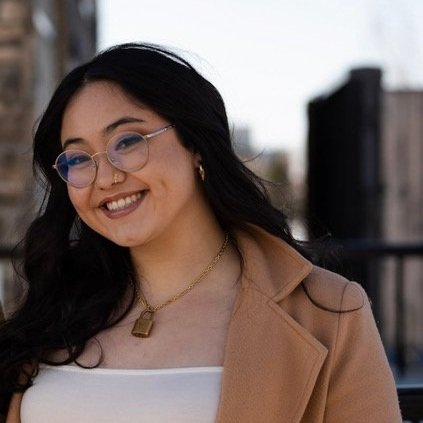
Nicole Mah (she/her)
Nicole is a student at the University of Regina completing her Bachelor of Human Justice Degree, with a minor in Law and Society. She has previously completed and obtained her Liberal Arts Diploma with a minor in Psychology, and a certificate of Human Justice. Nicole is passionate about restorative justice and demonstrates a strong commitment to advocating for and fostering positive change. She is a founding and executive member of the University of Regina’s Restorative Justice Club, an active member of the Saskatchewan Restorative Justice Network, and a member of the planning committee for the National Restorative Justice Symposium of 2023. Nicole’s dedication to human rights and justice is also evident in her role as a board member of Amnesty Regina Group #91. Nicole’s profound connections to her hometown, Regina, Saskatchewan, further fuel her drive to address systemic issues within local communities.
-

Ross McMurchy (he/him)
A recovering alcoholic of 34 years, Ross has done a lot of work on himself and with others. Ross completed a Trauma and Addiction Certificate at Algonquin college, has sat on township committees, and was a Big Brother for many years and used his experience to chair the events committee of the organization. Further, Ross was a co-counselor at Rideauwood for approximately 10 years, working mostly in a group environment. Then, Ross transitioned to helping at Serenity Renewal for Families and organized rural workshops for several years. Currently, Ross works as a facilitator with Lanark County Restorative Justice. Recently, he has stepped back from being chair of the Montague Police Board and the Lanark County Police Association. Ross shows great passion for Restorative Justice and loves being in the field.
-

Komal Gupta
Komal is a legal professional with over 9 years of experience in drafting, reviewing, and negotiating commercial contracts. Currently pursuing an MBA in Sustainability from Warwick Business School, Komal has completed a sustainability module from Sauder Business School (University of British Columbia). Komal has previously obtained her Bachelor’s Degree in Commerce and Law, and a Master’s Degree in Commercial Law. Komal recently engaged in a transformative experience during a meeting with the Indigenous community at the University of British Columbia in Vancouver. This encounter left a profound impact, inspiring her to use the legal expertise to serve communities in need. Komal is currently serving the community as a volunteer of Results Canada.
-

Ayelah Amjad (she/her)
Ayelah was nominated to join the board of the CRJC in 2024, driven by her intrigue in the restorative justice process. With a background in Engineering and Project Management, she has developed a strong foundation as a problem solver, always analyzing situations to find effective solutions. A firm believer in the power of healing and reconciliation over punishment, Ayelah recognizes the transformative potential of addressing the root causes of conflict. She is dedicated to continuously seeking out innovative solutions and is committed to creating systems that promote fairness, understanding, and lasting change for generations to come. Ayelah believes that it takes a lot of courage to self-reflect, and that restorative justice can happen if everyone gathers the courage to introspect.
-

Kat Kerr
Kat is a passionate advocate for youth mental health and restorative justice approaches from the beautiful island of Newfoundland. She brings a powerfully unique perspective that was acquired through the lens of lived experience and a background rooted in navigating complex systems at a young age, as well as a global journey working with youth as a way of healing and connection. As a Complex PTSD survivor, Kat has a deep understanding as to why restorative justice practices are so needed in a world such as today's. She is skilled at creating environments that foster safety, trust, and vulnerability - where others feel seen, valued and believed in. When Kat isn’t using her voice to help others reclaim theirs, she can be found sitting by the ocean watching the wild Newfoundland swells, hiking to some breathtaking views, or jet-setting off on a new adventure. Her goal is to make the world a kinder place to live in - one person, one story and one act of compassion at a time.
-
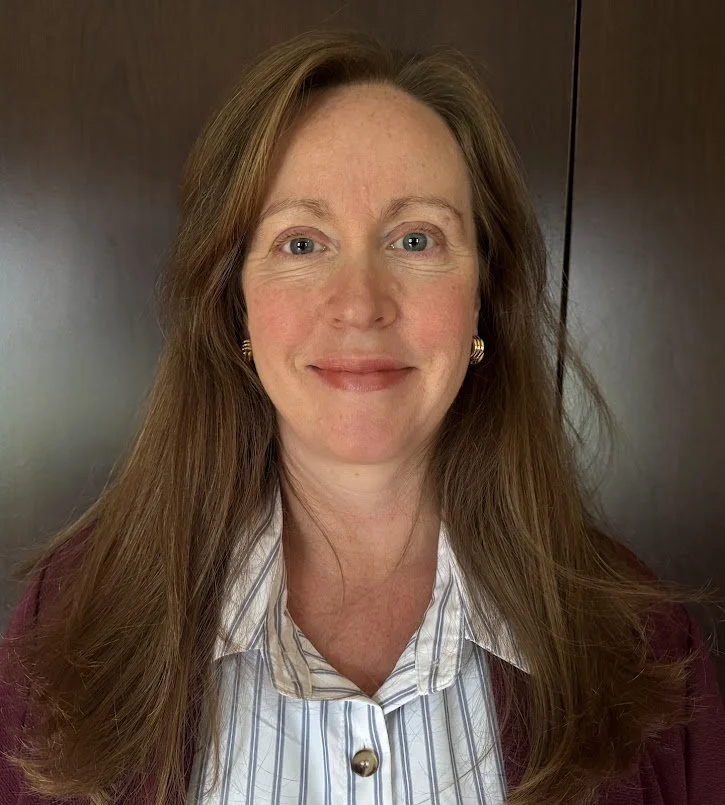
Tanya Wells-Lahaie
Tanya Wells-Lahaie is a public health leader with over 15 years of experience in program management, policy development, and systems-level change. Her work has focused on advancing health outcomes through evidence-informed, community-centered approaches, with particular expertise in prevention, health equity, policy, and cross-sector collaboration.
Tanya has led large-scale initiatives across government, healthcare, and community settings, translating research and data into actionable strategies, programs, and policy. She brings a strong foundation in trauma-informed practice and continuous improvement, with a commitment to building systems that support healing, accountability, and well-being.
She currently serves as Health Policy Manager with the Canadian Cardiovascular Society and is passionate about strengthening the connections between public health and restorative justice to advance more equitable and effective approaches to addressing harm.
-
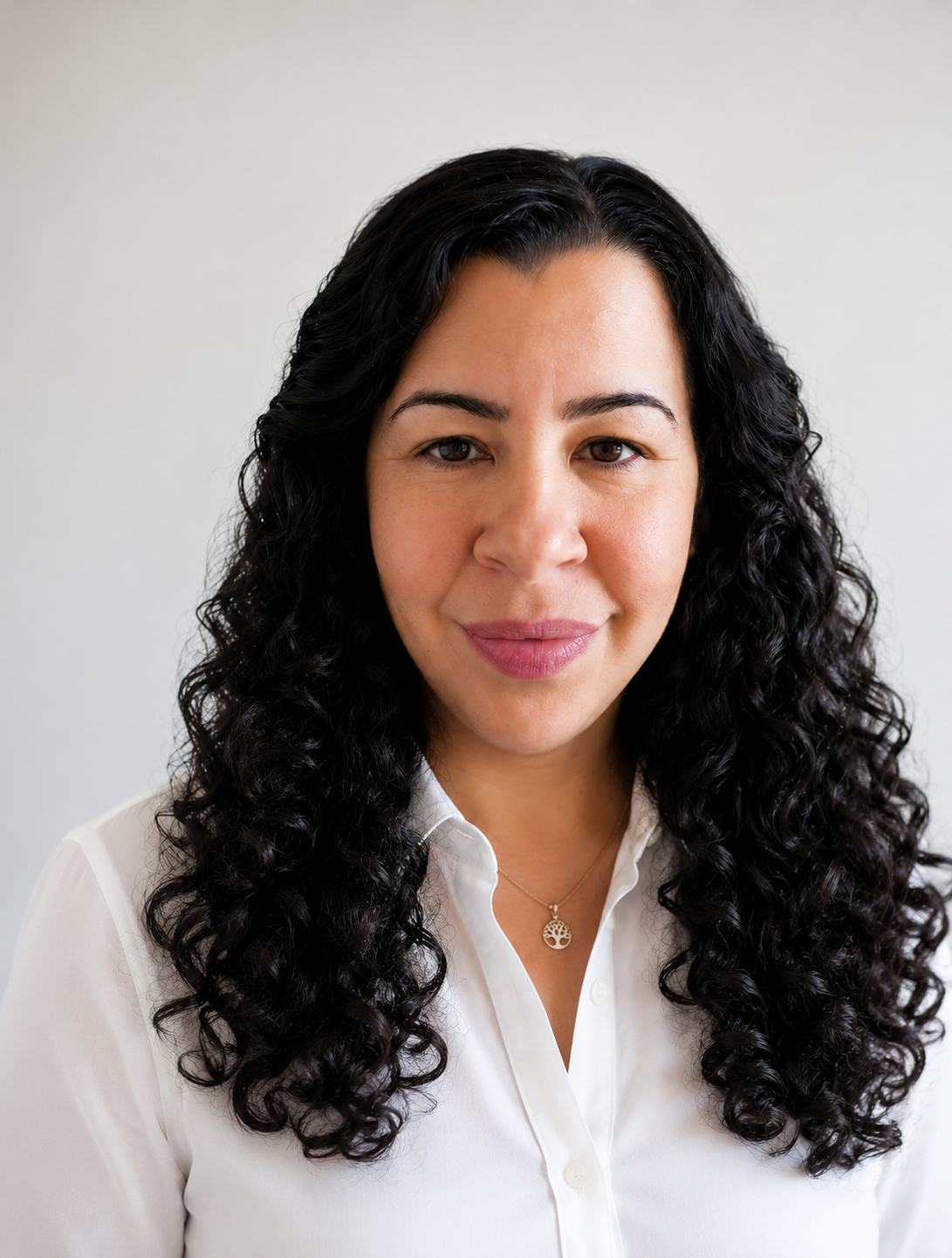
Giselle Liberman
Giselle is an Economist and Policy Advisor with cross‑sector experience across government, academia, and the private sector. She brings extensive expertise in stakeholder engagement, program design, implementation and delivery, and policy execution, paired with a strong ability to offer strategic guidance in complex, multi‑stakeholder environments.
Her work is rooted in evidence‑based analysis and a commitment to building effective, human‑centered systems. With a deep interest in restorative justice, Giselle champions trauma‑informed approaches that strengthen accountability, improve outcomes, and foster safer, more inclusive communities. She is guided by the belief that empathy, transparency, and responsible governance are essential to meaningful and sustainable change.
-
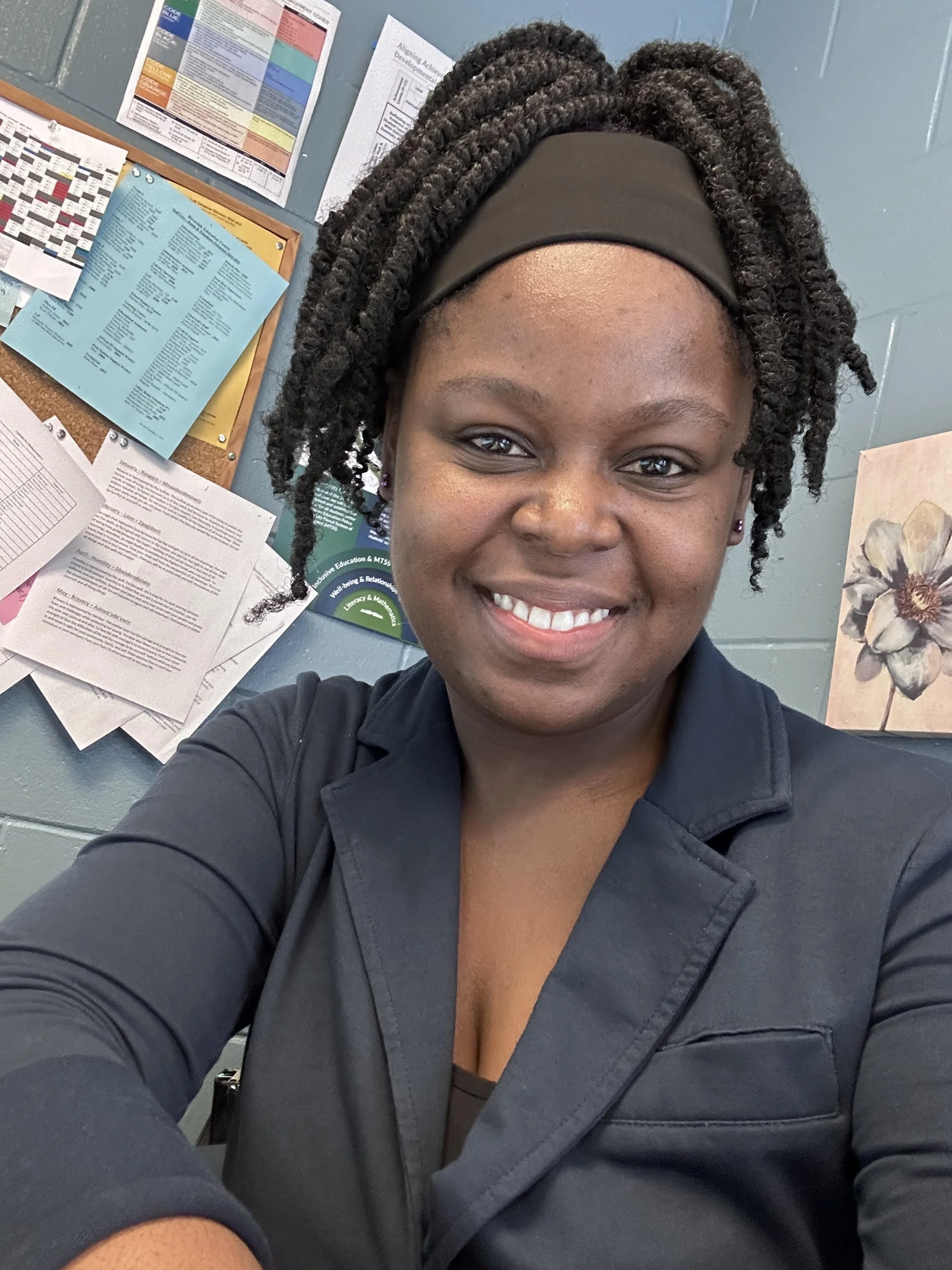
Shawna-Kay Lawrence (she/her)
Shawna-Kay is a Jamaican-Canadian educational leader, researcher, and restorative justice practitioner based in Nova Scotia. With more than six years of experience in education, she is committed to advancing equity, inclusion, and relationship-centred approaches within schools.
Currently serving as a Vice Principal with the Chignecto-Central Regional Centre for Education, Shawna-Kay's leadership focuses on fostering positive school climates, supporting student success, and strengthening culturally responsive and restorative practices. Throughout her career, she has worked closely with students, educators, families, and community partners to create learning environments grounded in belonging, accountability, and mutual respect.
Shawna-Kay holds a Bachelor of Education from the Mico University in Jamaica and two Master of Education degrees from St. Francis Xavier University. One is in Educational Administration and Policy, and the other is in Curriculum and Instruction with a focus on Culturally Responsive Pedagogy. As part of her ongoing commitment to restorative leadership and professional growth, she pursued studies in restorative justice and conflict resolution through Simon Fraser University and the ADR Learning Institute.
Beyond her professional role, Shawna-Kay is actively engaged in community leadership and research. She serves as a Board Member of the Healthy Tomorrow Foundation and is a Research Fellow with the Delmore Buddy Daye Learning Institute. Through her presentations, research, and community involvement, she advocates for equitable educational practices and restorative approaches that strengthen relationships and promote collective well-being.here